Koenigsegg Jesko NUR Revenge
A challenge without limits
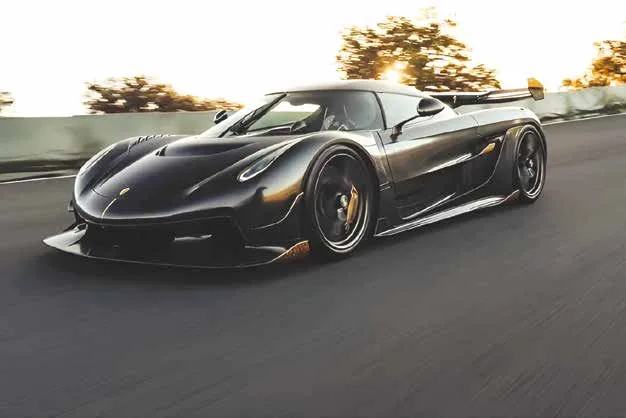
It’s designed to break records. After being consumed by fire during track testing, the brand recreated it as the Jesko Nur Revenge, in homage to human perseverance and ingenuity.
A failure in the electrical system caused a fire that quickly engulfed it in flames, and although no one was injured, the damage was irreparable, which is why Christian Von Koenigsegg, founder of the brand, transformed it inspired by the spirit of competition and the constant search for improvement, creating an absolutely renewed design.
Power
Under the hood, a 5.0-liter twin-turbo V8 engine produces 1,600 hp when running on E85 (ethanol). This engine is paired with a 9-speed transmission called Light Speed Transmission (LST), exclusive to the brand, which allows for near-instantaneous gear changes. Thanks to this combination, the car can exceed 480 km/h, depending on the configuration. It features a high-performance braking system that ensures precise stopping, even from extreme speeds, providing safety without compromising performance.
A challenge without limits
Only 125 units will be manufactured, and all have already been reserved, with some delivered by the end of 2025. This model symbolizes the human capacity to overcome adversity, demonstrating that limits exist to be overcome.
Interior
The cabin showcases craftsmanship and modern technology. The seats are upholstered in premium leather with contrasting stitching that reinforces the theme of revenge with subtle red accents. The digital instrument cluster is located behind the steering wheel, displaying vital information such as speed, RPM, and driving modes. An integrated central screen manages navigation, entertainment, and vehicle status monitoring. All these features are controlled via physical touch buttons, minimizing distractions.
Exterior
Functional aesthetics to maximize aerodynamic efficiency while maintaining Koenigsegg’s DNA. An ultralight carbon fiber body combines strength with minimal weight, delivering exceptional and efficient track performance. The front features a more pronounced splitter and intakes that improve airflow to the engine and radiators. At the rear, a massive adjustable wing optimizes downforce, generating up to 1,400 kg at speeds approaching 300 km/h (186 mph).